By Gergely Orosz, the author of The Pragmatic Engineer Newsletter and Building Mobile Apps at Scale
Navigating senior, tech lead, staff and principal positions at tech companies and startups. An Amazon #1 Best Seller. New: the hardcover is out! As is the audibook. Now available in 6 languages.
In short, the Warriors Orochi 3 PSP English patch is more than text on a screen. It’s community empowerment, technical ingenuity, and cultural mediation compressed into a small file that unlocks a large, chaotic world. Whether you’re in it for the frenetic hordes, the character cameos, or merely curiosity about fan translation craft, the patch exemplifies how player communities keep gaming history playable and relevant.
Warriors Orochi 3’s PSP English patch is one of those grassroots fan projects that speaks to the passion and persistence of gaming communities. On the surface it’s a straightforward effort: translate menus, character lines, and mission text into English so non-Japanese players can experience a sprawling crossover that otherwise stays locked behind a language barrier. But the patch’s impact goes deeper.
Finally, it stirs nostalgia and accessibility debates. For collectors and long-time series fans, the patch is a gift—an invitation to revisit or discover a title that commercial publishers never localized widely. But it also raises questions about preservation, legality, and the limits of fan labor: when does community effort complement official releases, and when does it risk stepping on intellectual property, distribution, or monetization lines?
Second, it showcases fan craftsmanship. Creating a functional patch for a handheld port requires technical skill—extracting text assets, managing encoding constraints, fitting English lines into UI space designed for Japanese, and ensuring stability on diverse PSP firmware and emulators. The project isn’t just translation; it’s engineering within strict platform limits. That blend of linguistic and technical problem-solving highlights what dedicated communities can achieve outside commercial channels.
First, it revives access. Warriors Orochi 3 is a dense, content-heavy title—hundreds of characters, branching stages, and a collage of mythic and historical samurai/soldier archetypes. Without a reliable translation, much of the strategy, story beats, and character quirks are effectively hidden. The English patch opens the game for exploration, letting new audiences discover the absurd charm and chaotic combat that define Omega Force’s cross-series mashups.
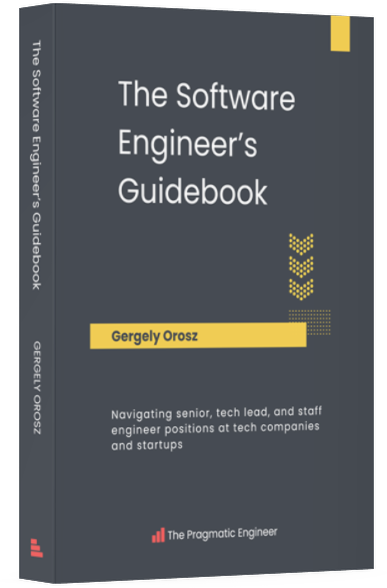
The book is separated into six standalone parts, each part covering several chapters:
Parts 1 and 6 apply to all engineering levels: from entry-level software developers to principal or above engineers. Parts 2, 3, 4 and 5 cover increasingly senior engineering levels. These four parts group topics in chapters – such as ones on software engineering, collaboration, getting things done, and so on.
This book is more of a reference book that you can refer back to, as you grow in your career. I suggest skimming over the career levels and chapters that you are familiar with, and focus reading on topics you struggle with, or career levels where you are aiming to get to. Keep in mind that expectations can vary greatly between companies.
In this book, I’ve aimed to align the topics and leveling definitions closer to what is typical at Big Tech and scaleups: but you might find some of the topics relevant for lower career levels in later chapters. For example, we cover logging, montiroing and oncall in Part 5: “Reliable software systems” in-depth: but it’s useful – and oftentimes necessary! – to know about these practices below the staff engineer levels.
The Software Engineer's Guidebook is available in multiple languages:
You should now be able to ask your local book shops to order the book for you via Ingram Spark Print-on-demand - using the ISBN code 9789083381824. I'm also working on making the paperback more accessible in additional regions, including translated versions. Please share details here if you're unable to get the book in your country and I'll aim to remedy the situation.
I'd like to think so! The book can help you get ideas on how to help software engineers on your team grow. And if you are a hands-on engineering manager (which I hope you might be!) then you can apply the topics yourself! I wrote more about staying hands-on as an engineering manager or lead in The Pragmatic Engineer Newsletter.
I've gotten this variation of a question from Data Engineers, ML Engineers, designers and SREs. See the more detailed table of contents and the "Look inside" sample to get a better idea of the contents of the book. I have written this book with software engineers as the target group, and the bulk of the book applies for them. Part 1 is more generally applicable career advice: but that's still smaller subset of the book.